Welcome to a different kind of healing
“The highest ideal of cure is the speedy, gentle and enduring restoration of health by the most trustworthy and least harmful way.”
Professional Homeopathy
You hold inside of you an incredible capacity for whole health and vitality.
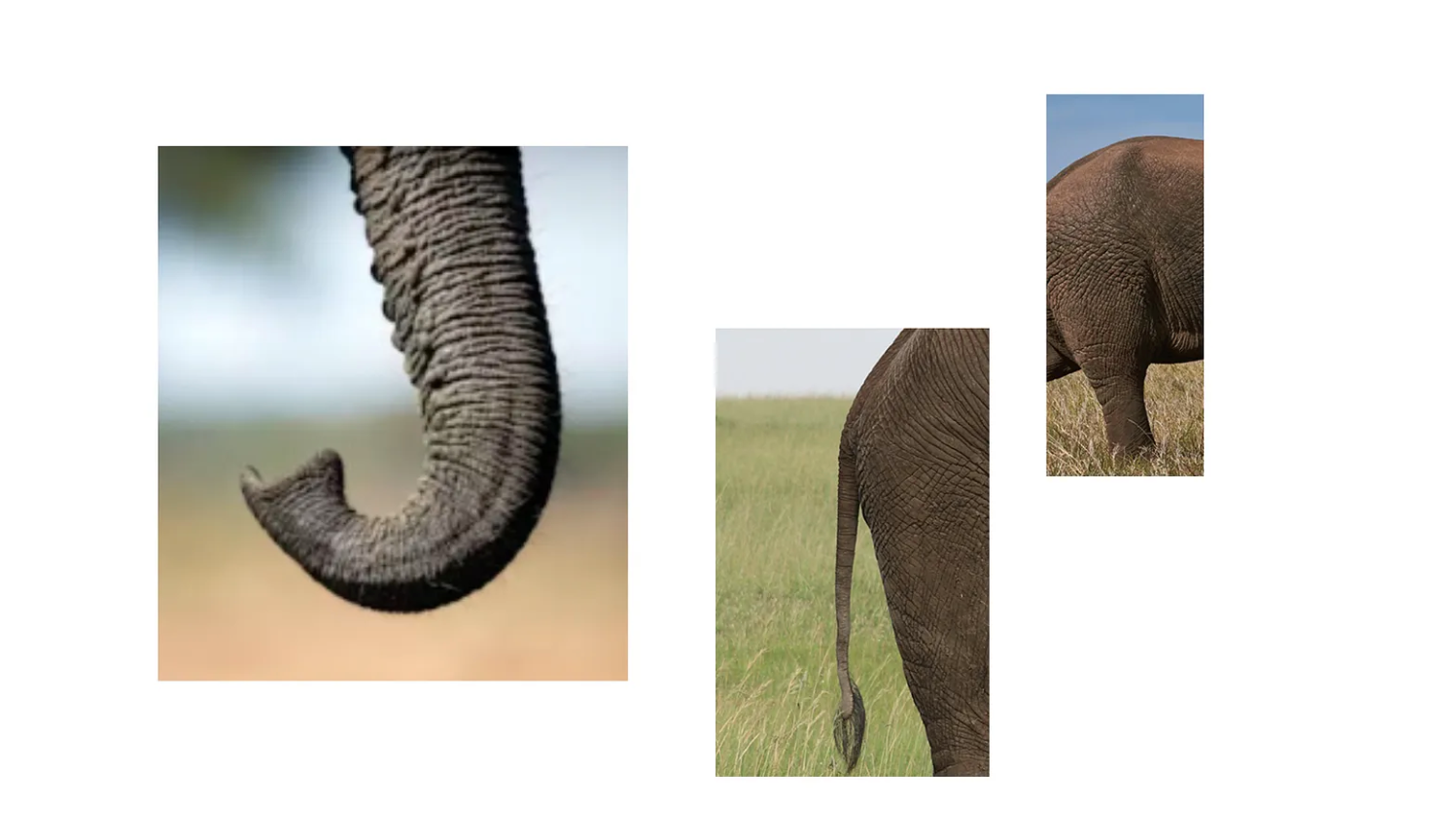
We all know the old story of 3 blind men who were trying to identify an elephant. Each one approached the elephant from a different direction: one came upon the trunk, the second explored the feet and sides and the third felt the tail.
One insisted an elephant was a massive tree-like structure firmly planted on the ground, which widened to the side of a building. The other scoffed, “no, no,” he said, “an elephant is a snake-like being with a tuft of course hair at one end.” “That’s ridiculous!” said the third. “An elephant is a long, thick, undulating animal with two moist orifices at the lower end through which air, food and water are taken in, and often snorted out” he said excitedly.
Were any of them wrong? No, of course not, however their understanding was limited to the part they explored.
In our conventional medicine system, a person is treated in terms of body parts or systems. There are specialists or pillars, each focussing on their part with little communication between them and the possibility the parts work together is missed. Also in the area of psychotherapy, each has their own specialty or style or theory. Each school of thought has their area of interest, each has their own view. It can be competitive, which is especially true when there is any competitive arena of merchandising or sales.

Homeopath Offers Whole Person Healing
Homeopathy treats the whole, and is based on the principle that the mind, body and spirit are connected, that there is no separation. Homeopathy offers a uniquely inclusive and comprehensive vantage point. The homeopath explores all aspects of who you are including emotions, thoughts, fears, hobbies. We explore the unconscious, the strange and the wonderful. We want to hear it all.
The Homeopath leaves no fingerprint
Homeopathy understands that change and healing come from within and cannot be pressed onto the patient.
There is no coaching. No ego or will. No pressing or pushing.
The success of homeopathy depends on the skill and the ability of the prescriber to understand and elicit information. The art is to find the exact place where the body is stuck and provide the precise intelligent information so the system can strengthen and recalibrate. Homeopathic remedies help remove obstructions and leverage your own innate healing capacity to alleviate suffering and ease pain.
What makes homeopathy different is the recognition of the vital force, the self healing capacity of the body.
Homeopathy is based on the principle of ‘like cures like’
Homeopathy regards symptoms as the body’s healthy attempt to restore itself to balance. Therefore, a homeopathic practitioner chooses a remedy that supports, not suppresses, symptoms. Why is this? Homeopathy is based on a rule of nature called the Law of Similars. This “like cures like” Law states that a substance that can cause a “sickness” in a healthy person can help restore health to a person suffering with a similar “sickness”. For instance, when you peel an onion, your eyes burn, itch, and water. You might also have sneezing and runny nose. During a cold or allergy attack, Allium cepa, a homeopathic remedy derived from red onion, can help your body heal itself from runny nose, watery eyes, and sneezing. Conventional medicine uses antihistamines to dry up (suppress) runny nose and watery eyes, and the medication often causes drowsiness and constipation.
Homeopathy is a powerful form of energy healing which has a 200 year history.
Homeopathy at a time in history, overshadowed conventional medicine. In the late 1800s/early 1900s if you wanted to practice medicine, you could choose to study at a conventional medical college, or a homeopathic medical college. There were hundreds of homeopathic medical colleges spread across North America. Emily Stowe, the first female doctor in Canada, graduated in 1867 from the New York Homeopathic Medical College and was the first woman in Canada with a public medical practice in Toronto.
Homeopathy Understands Intergenerational Healing
Hahnemann, the founder of homeopathy, was one of the first physicians to understand and bring to awareness the concept of miasm: energies and patterns which are passed down through generations.
You have inherited not only the colour of your eyes from a parent or grandparent, and there are other things passed down to you. Homeopathy gently unravels these inherited themes, offering a path toward true healing. It is known that a person can carry a family problem without knowing where it is coming from.
Homeopathy can help with that
I have seen Homeopathy getting to small places that nothing else can reach. The action of the medicines is gentle and subtle and the effects can be powerful with long lasting effects.
Homeopathy leaves no fingerprint. Homeopathic medicines are safe with no side-effects which means they can be used for everyone. Homeopathy is safe and effective for children, babies and used by homeopaths and vets in care for animals, farming and agriculture.
It’s the quantum physicists who could explain best how homeopathy works
Your appointment experience is like talking to a good friend
Our first appointment is the longest, and can last an hour and a half or more. It is a full case-taking, providing you with a safe and confidential environment where a trusting therapeutic relationship can be built. We will be talking about what matters to you, your current condition and how it affects you. We will identify goals and outcome planning where we talk about building a path to your best state of health. If this is your first time with a homeopath, this may be the first time you will have been asked about things like your dreams, sleep patterns, and food preferences.
Homeopathy is a unique art and science that takes years of continuous study to master.
If you want to learn a little more about how this elegant form of medicine works, I encourage you to take the online Homeopathy Essentials workshop. This will give you foundational tools for home first aid situations and a back stage pass to see how professional homeopaths work.
My Personal Experience of Homeopathy
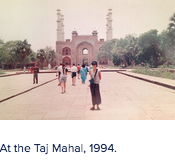
I have experienced homeopathy at work in many different countries. Early in my experience, on a six-month return trip to Canada coming back via Asia, I spent 6 weeks studying with Dr. H.L Chitkara in Delhi India. Dr. Chitkara was one of the top homeopaths of his time, and very kind to me. Together with 3 other Indian doctors, I spent my days in his clinic which consisted of one very large room, with many chairs on the periphery, and the 5 of us, 4 Doctors and Dr. Chitkara, working around his large wooden desk. People would filter into the room and sit in the perimeter chairs until called by one of us to join us at the desk. There was no privacy: sometimes 4 cases were going at one time. The prescribing doctor would speak with the patient then consult with Dr. Chitkara. A prescription was made, the patient then went to the far corner of the room where the pharmacy was, to pick up his prescription. I experienced homeopathy actively incorporated into community. It truly is the people’s medicine.
I love the language of homeopathy, I am inspired by the depth of healing at which homeopathy can reach. Homeopathy is a sophisticated art and a hard-core science. It satisfies both the artist in me, and my true science nerd self.
What can I expect from homeopathy
Many acute conditions can be resolved quite quickly. It is almost impossible to say how long it can take a chronic condition to recover. Just as each person is different, your healing time is unique to you. Homeopathy can help. Homeopathy helps people rebuild and repair after illness, and helps those who have had reversals in health.
Homeopathy helps to remove barriers to healing through skillfull classical homeopathic prescribing.
What are some of the things my homeopath will ask
Here is a sampling of some of the questions that are typically asked during a homeopathic conversation
when did it start
what makes it better or worse
how is your body temperature
how is your sleep, do you have dreams
which foods do you like, or deeply dislike
what is your family history
what is the biggest stressor in your life
what are your fears
What exactly is a homeopathic medicine
Most homeopathic medicines are dispensed as small sugar pills, and you only take one or two pills at one time. The tiny pills are sweet tasting, and non toxic. The sugar pills can be attractive to children so keep out of reach and don’t worry, even if your child eats the entire bottle, nothing will happen to them.
Is there testing involved in my homeopathic prescription
I am trained as a professional medical classical homeopath. I prescribe single remedies and there is no muscle testing or other kinds of testing to obtain your remedy. I listen carefully, I use my years of experience, wisdom and training to determine a remedy for you.
I create an environment where people can let go of their left brain and embrace their right brain expressions, rooted in their non-logical, spontaneous, subconscious true, and innermost core makes casetaking and understanding of the pattern more deep and complete.
In my practice, I use dreamwork, artwork, a blend of gestalt therapy, Satir work, and Integrative Body Psychotherapy, as ways to hold space and explore to find a deeper understanding of the self. These are ways that I help you tap into your right brain, to explore the spontaneous, true and core expressions of yourself.
Will I get my remedy straight away?
There are more than 4000 remedies I have access to. If I need time to study your case and determine the best course of action, your remedy will be sent to you in the mail.
What is the difference between homeopathy, naturopathy, herbalism and oriental medicine
Although homeopathic remedies are derived from natural substances, homeopathy should not be confused with other natural healing modalities like herbalism or Traditional Chinese Medicine (TCM). Homeopathy is a unique therapeutic healing system, and the word homeopathy is not an umbrella term that includes other natural therapies.
The term 'naturopathic physician' is an umbrella term, meaning that the doctor practices natural medicine within a legal scope of practice. The naturopathic scope of practice is varied and it is uncommon that any two naturopathic physicians will have the same practice style. Most will choose to specialize in one or several modalities. Homeopathic medicine is one of the modalities under our scope of practice. Homeopathic medicine is a complete and effective form of medicine unto itself.
What is 'classical' homeopathy
At the core of nearly all of the definitions for “classical” homeopathy over the past 200 years are the following guiding principles:
The Law of Similars: This “like cures like” Law in nature states that a substance that can cause a “sickness” in a healthy person can help restore health to a person suffering with a similar “sickness”.
Minimum Dose: In homeopathy, a person takes just enough of a homeopathic remedy to stimulate their body’s own healing response.
Totality of Symptoms: Homeopathy recognizes that each person exhibits “sickness” in a unique and slightly different way. A homeopathic practitioner chooses a remedy that matches the unique symptom profile of the individual.
Single Remedy: Only one remedy is given at a time.
I am trained as a professional medical classical homeopath. I prescribe single remedies and I don’t muscle test or do other kinds of testing to obtain your remedy. I listen carefully, I use my years of experience, wisdom and training to determine a remedy for you.
How does homeopathy differ from conventional medicine
Homeopathy differs from conventional medicine in several ways including how symptoms are defined, how “medicines” are chosen, how much “medicine” is given, and cost.
First, homeopathy regards symptoms as the body’s healthy attempt to restore itself to balance. Therefore, a homeopathic practitioner chooses a remedy that supports, not suppresses, symptoms. Why is this? Homeopathy is based on a rule of nature called the Law of Similars. This “like cures like” Law states that a substance that can cause a “sickness” in a healthy person can help restore health to a person suffering with a similar “sickness”. For instance, when you peel an onion, your eyes burn, itch, and water. You might also have sneezing and runny nose. During a cold or allergy attack, Allium cepa, a homeopathic remedy derived from red onion, can help your body heal itself from runny nose, watery eyes, and sneezing. Conventional medicine uses antihistamines to dry up (suppress) runny nose and watery eyes, and the medication often causes drowsiness and constipation.
Second, homeopathy recognizes that each person exhibits “sickness” in a unique and slightly different way. That is why two people with the same illness will not necessarily receive the same homeopathic remedy. A homeopathic practitioner chooses a remedy that matches the unique symptom profile of the individual. For example, a person with upset stomach who is chilly and not thirsty would receive a different remedy than someone with upset stomach who is hot, sweaty, and craves water. This practice is known as Totality of Symptoms, an important homeopathy guiding principle. Conventional medicine prescribes treatments based on a diagnosis.
Next, in homeopathy, a person takes just enough of a homeopathic remedy to stimulate their body’s healing response. When this occurs, the person stops taking the remedy, and the body will continue to heal itself. This homeopathy guiding principle is known as Minimum Dose. Conventional medicine seeks to control illness through the continued and regular use of medications; if the medicine is withdrawn, the person’s symptoms may return.
Finally, homeopathic remedies are less expensive than conventional medicines, costing on average $8–$10 for a bottle that contains multiple doses. Sometimes only a single dose of a remedy is needed to help the body restore health. Remedies have an extended shelf life, and each may be used for several different conditions.
What is the history of homeopathy
Samuel Hahnemann was a German Physician and founder of Homeopathy. He was unhappy with the large number of toxic drugs given to patients and the way medicine was being practiced at the time. The medicine of the day was based upon bloodletting, purging, cathartic and diaphoretic treatments meant to 'balance the humours' and eliminate 'toxins' from the body. Hahnemann was aware of the infectious and contagious nature of many diseases and was early in recommending hygiene as a means of prevention. Heavy metals such as mercury were routinely used topically and internally as treatment. He felt people got better despite these treatments and looked for a more gentle, humane, non-toxic and permanent way to treat patients.
Hahnemann was a master of many languages and a chemist. While translating a pharmacology text in 1790 by Scottish Physician William Cullen, he was struck by a conclusion that Cullen had made about the curative effect of Peruvian Bark (Cinchona) on intermittent fevers. Cullen attributed the effects of the bark to its bitter and astringent qualities. Hahnemann knew of many things that were bitter and astringent and did not have this effect on intermittent fevers. This piqued his curiosity and he decided to do an experiment on himself by taking the substance and noting the effects. By doing this he brought out in himself the characteristic symptoms of intermittent fever, the condition for which Cinchona was often seen to cure.
This lead him to formulate that a disease will be cured by a substance that can create a similar state in a person. This was the birth of the Law of Similars and Hahnemann went on to cure many patients with malaria with Cinchona bark.
Hahnemann went on to do more provings of other medicines compiling over time detailed picture information of many remedies. Each remedy picture is comprehensive and includes detailed information on the mind, the emotions and the physical body including dreams, food preferences, and sleep. Homeopathy treats the whole and our medicines not only work on the physical level but also on the mental and emotional levels.
Are homeopathic remedies safe
Homeopathic remedies are FDA-regulated, non-drowsy, non-habit-forming, and non-toxic. The remedies also have no known side effects and no known drug interactions.
Can pregnant or breastfeeding women and children use homeopathy
Pregnant and breastfeeding moms and newborn parents should always check with their conventional doctor or naturopathic doctor first before using a homeopathic remedy. Homeopathic remedies are FDA-regulated, non-drowsy, non-habit-forming, and non-toxic. The remedies also have no known side effects and no known drug interactions.
Approximately 40% of my clients are children. Children respond to homeopathy, it is safe and effective. Find out more about how I work with children here.